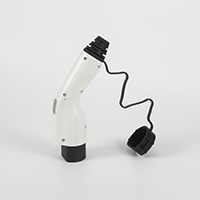
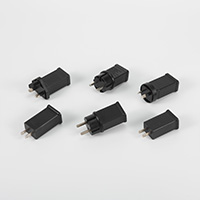
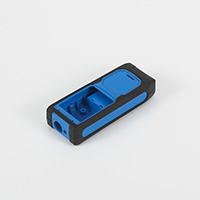
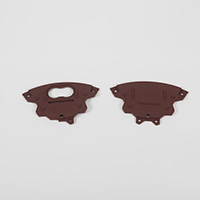
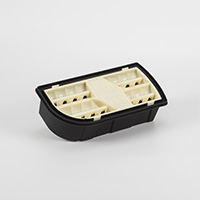
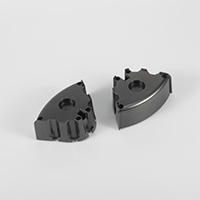
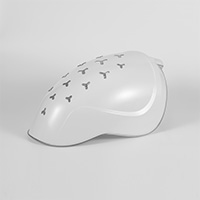



But, what is overmolding? And, more importantly, how can it affect how products are designed and profits achieved?
Overmolding is an injection molding process used to mold one plastic (commonly a rubber-like plastic called TPE) over top of another component (substrate). The substrate is usually an injection-molded plastic part, but it could also be made from various other materials. Overmolding is used across several industries and serves a wide array of purposes. Below are a few examples of overmolding applications:
● Grip – Generally speaking, components with handles often need something to help the operator maintain grip. Most importantly, overmolded grips are safer for operators by providing increase grip, especially in wet conditions.
● Vibration Dampening – Rubber bumpers or mounts can protect components (like electronics) from vibrations.
● Comfort – Since the grip material is injection overmolded, it can be formed in any shape, making it great for ergonomics.
● Sealing – Overmolding can be used to create water-resistant seals on electronics and other devices.
● Sound Absorption – Much like vibration dampening, sound waves can be absorbed by overmolding.
- Designing For OvermoldingDesigning for overmolding involves considering specific guidelines and principles to ensure successful integration of multiple materials in a single part. Here are some key aspects to consider when designing for overmolding:

Material Selection: Choose compatible materials for the substrate and overmold to ensure proper bonding and adhesion. Typically, a rigid substrate material is used with a soft or flexible overmold material, such as TPE or rubber. Consider the properties required for each material and their compatibility.
Part Design: Design the substrate part with features that facilitate overmolding. For example, include appropriate undercuts, ribs, or recesses to allow the overmold material to mechanically lock onto the substrate and improve adhesion.
Wall Thickness: Maintain consistent wall thickness throughout the part to ensure proper flow of both the substrate and overmold materials during the molding process. Varying wall thickness can lead to uneven shrinkage and poor adhesion.
Draft Angles: Incorporate draft angles in the design to facilitate easy removal of the part from the mold. Draft angles also aid in smooth flow of materials and reduce the risk of material entrapment.
Bonding Surfaces: Design the bonding surfaces of the substrate part to provide a large contact area for improved adhesion between the materials. Roughening or incorporating texture on the bonding surfaces can enhance the bond strength.
Overmold Material Placement: Consider the placement and thickness of the overmold material carefully. Determine the areas that require the soft touch, grip, or specific functionality provided by the overmold, and design the part accordingly.
Tooling: Work closely with tooling engineers to ensure that the mold design accommodates the overmolding process. Consider factors such as part ejection, material flow, gate placement, and cooling channels.
Prototyping and Testing: Validate the design through prototyping and testing. This helps identify any issues related to material compatibility, adhesion, shrinkage, or functionality before moving to full-scale production.
By following these guidelines, you can optimize the design for overmolding and achieve a successful integration of different materials, resulting in a functional and aesthetically appealing product. Collaboration with experienced molders and engineers is crucial to ensure the feasibility and manufacturability of the design.- Overmolding OperationsGenerally speaking, the overmolding process is the same as an injection molding process, except that the plastic is molded over another component. The difference lies in operation. With overmolding, the substrate is loaded into the mold on each cycle. In addition, how the substrate is loaded creates two different overmolding operations:

- 1. MANUAL MOLDING
With a manual operation, the substrate is injection molded via a traditional injection molding process. The substrates are then hand-loaded into another mold for the overmolding operation. The operator will also remove the finished part from the mold, provide an inspection, and package the parts. Manual overmolding is the most common procedure for low to mid-volume overmolding.
The advantage of manual overmolding is simplicity. The tooling required for the substrate and overmold is simple (when compared to two-shot tooling), and there is no secondary equipment required. The downside is the labor allocation and potential for inconsistent cycle times created by operators. As annual order volumes increase, the labor involved can become significant enough to justify investment in automation systems or a two-shot molding operation.
2. TWO-SHOT MOLDINGMore advanced injection molding machines can run two different polymers at the same time. Two-shot molding uses a complicated mold and robotics to mold the substrate on one side and then transfer it to the other half. This happens on every cycle. The process requires a more advanced injection molding machine and mold, but it may yield a lower piece price compared to manual operations.
Deciding between the two molding operations is done on a case by case basis. There is no universal rule as to when an automated overmolding operation is justified. To provide the end-user with the best option, injection molders will look at several variables, such as: labor allocation, annual order quantities, budget, material usage, cycle time, etc. - Overmolding Materials
Common polymers for overmolding:
 ABS ACETAL HDPE LCP PEI PMMA PC PP PPA PPS PS PSU TPE TPU PEEK
Common substrates in micro overmolding
 Metal Plastic Tubing Fabric/mesh Delicate electronics Printed circuit boards (PCB) Batteries Microfluidic chips Delicate assemblies Other biomaterials
 - Plastic Overmolding Applications
Plastic Overmolding are regularly used for a wide variety of applications, including:
● Automotive
● Appliance
● Controls
● Medical devices
● Electronic devices
● And more
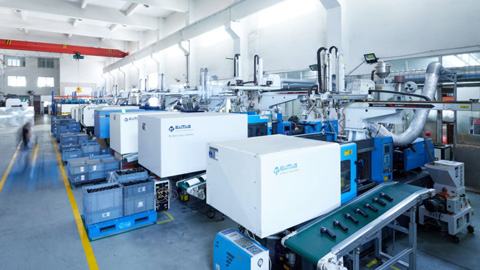

Integrity, And Responsiveness.













 ISO 9001 - 2015
Our Specialties.

Get Started With Your Next Injection Molding Project.
If you have any questions about our products and services, please do not hesitate to contact us. Our team will reach you within 12 hours!
We offer an expansive selection of customization options that match the unique demands of the OEM market.
Quality control is always the highest priority, upholding strict standards in every step of the manufacturing process.